

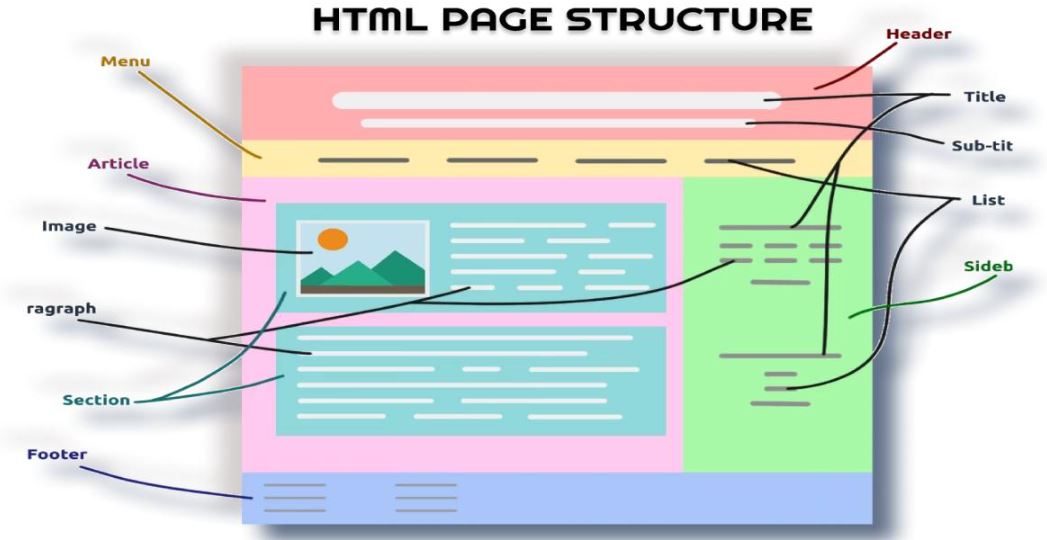
Introduction
HTML (HyperText Markup Language) is the foundation of every website on the internet. Whether you are building a simple personal blog, an e-commerce platform, or a complex web application, HTML provides the structure that browsers use to display content.
For beginners entering web development, HTML is the first and most important technology to learn.
What is HTML?
HTML is a markup language used to create and organize content on web pages. It defines elements such as headings, paragraphs, images, links, tables, forms, and more.
Browsers read HTML code and render it into the web pages we see every day.
Why is HTML Important?
HTML serves as the backbone of web development because:
- It structures website content.
- It works with CSS for styling.
- It works with JavaScript for interactivity.
- It is supported by all modern browsers.
- It improves website accessibility and SEO.
Basic Structure of an HTML Document
Every HTML page follows a standard structure:
<!DOCTYPE html>
<html>
<head>
<title>My First Website</title>
</head>
<body>

<h1>Welcome to My Website</h1>
<p>This is my first web page.</p>

</body>
</html>
Common HTML Elements
Headings
HTML provides six heading levels:
<h1>Main Heading</h1>
<h2>Sub Heading</h2>
<h3>Section Heading</h3>
Paragraphs
<p>This is a paragraph.</p>
Links
<a href="https://example.com">Visit Website</a>
Images
<img src="image.jpg" alt="Sample Image">
Lists
Unordered List:
<ul>
<li>HTML</li>
<li>CSS</li>
<li>JavaScript</li>
</ul>
Ordered List:
<ol>
<li>Learn HTML</li>
<li>Learn CSS</li>
<li>Learn JavaScript</li>
</ol>
HTML5 Features
HTML5 introduced many powerful features:
- Semantic Elements
- Audio and Video Support
- Local Storage
- Canvas Graphics
- Improved Forms
- Geolocation API Support
Popular semantic tags include:
<header>
<nav>
<section>
<article>
<footer>
Best Practices
Use Semantic Tags
Semantic tags improve readability and SEO.
Write Clean Code
Maintain proper indentation and formatting.
Add Alt Text to Images
This improves accessibility and search engine rankings.
Validate HTML
Use validation tools to identify and fix errors.
HTML and SEO
Search engines rely on HTML structure to understand web content.
Important SEO elements include:
- Title Tags
- Meta Descriptions
- Heading Tags
- Image Alt Attributes
- Structured Content
A properly structured HTML page can improve search engine visibility and user experience.
Conclusion
HTML is the foundation of modern web development. Understanding HTML concepts and best practices is essential for creating professional, accessible, and search-engine-friendly websites. Whether you are a beginner or an experienced developer, mastering HTML remains a valuable skill in the ever-evolving world of web technology.