
Introduction
In today’s fast-paced digital world, organizations need applications that can be developed quickly, securely, and cost-effectively. Oracle Application Express (Oracle APEX) has emerged as one of the most powerful low-code development platforms, enabling developers to build scalable enterprise applications with minimal coding effort.
Whether you are creating dashboards, workflow systems, ERP extensions, approval applications, or business portals, Oracle APEX provides everything needed to develop modern web applications rapidly.
What is Oracle APEX?
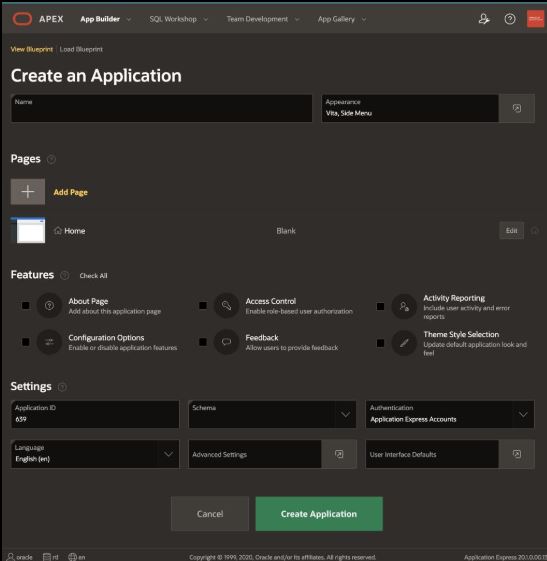
Oracle APEX (Application Express) is a low-code development platform built on Oracle Database. It allows developers to create secure, scalable, and responsive web applications using a browser-based environment.
Oracle APEX is included with Oracle Database and Oracle Cloud Infrastructure, making it a cost-effective solution for organizations of all sizes.
Why Oracle APEX is Popular
Rapid Development
Applications can be built significantly faster compared to traditional development methods.
Low-Code Approach
Developers can create complex business applications with minimal coding.
Built-in Security
Oracle APEX inherits Oracle Database security features.
Responsive Design
Applications automatically adapt to desktops, tablets, and mobile devices.
Enterprise Ready
Oracle APEX is trusted by governments, enterprises, and startups worldwide.
Oracle APEX Architecture
Oracle APEX consists of:
Oracle Database
Stores application data and business logic.
APEX Engine
Processes application requests and renders pages.
Web Server
Handles communication between users and the application.
Browser
Provides the user interface.
This architecture ensures excellent performance and scalability.
Key Features of Oracle APEX
Interactive Reports
Users can:
- Filter data
- Sort records
- Export reports
- Create charts
- Save custom views
Interactive Grids
Interactive Grids allow users to:
- Edit data directly
- Add new records
- Delete records
- Perform bulk updates
Dashboards
Developers can build real-time dashboards using:
- Charts
- KPI Cards
- Progress Bars
- Reports
REST API Integration
Oracle APEX easily integrates with external systems through REST APIs.
Examples include:
- Microsoft Graph API
- Payment Gateways
- ERP Systems
- CRM Applications
Oracle APEX Components
Pages
Each screen in an application is called a page.
Regions
Regions display content such as reports, forms, charts, and calendars.
Items
Items collect user input.
Examples:
- Text Fields
- Select Lists
- Date Pickers
- Checkboxes
Processes
Processes execute PL/SQL code during page submission.
Validations
Ensure data quality before saving records.
Oracle APEX and PL/SQL
One of the biggest advantages of Oracle APEX is its seamless integration with PL/SQL.
Developers can:
- Create procedures
- Execute packages
- Call functions
- Implement business rules
This makes Oracle APEX ideal for enterprise applications.
Oracle APEX Use Cases
Organizations use Oracle APEX to build:
Employee Portals
Manage employee information and workflows.
Supplier Management Systems
Handle supplier onboarding and approvals.
Budget Management Systems
Track budgets and approval processes.
Inventory Applications
Monitor stock levels and transactions.
Customer Service Portals
Manage tickets and support requests.
Oracle APEX Best Practices
Use Reusable Components
Reduce development effort and improve maintenance.
Optimize SQL Queries
Efficient SQL improves application performance.
Secure Sensitive Data
Use proper authentication and authorization.
Follow Naming Standards
Maintain consistent naming conventions for pages, items, and processes.
Use APEX Collections Carefully
Optimize performance when handling temporary data.
Oracle APEX and Oracle Cloud
Oracle APEX works perfectly with OCI.
Benefits include:
- Easy deployment
- High availability
- Scalability
- Backup and recovery
- Enterprise security
Many organizations deploy Oracle APEX applications directly on OCI.
Oracle APEX Career Opportunities
Demand for Oracle APEX professionals continues to grow.
Popular roles include:
- Oracle APEX Developer
- Oracle Technical Consultant
- Oracle Cloud Developer
- Full Stack Oracle Developer
- Oracle Solution Architect
Professionals with Oracle APEX and PL/SQL expertise are highly valued across industries.
What’s New in Oracle APEX 26.1?
Oracle APEX 26.1 introduces several enhancements focused on:
- Improved developer productivity
- Better user experience
- Advanced AI integration
- Enhanced security
- Faster application development
These improvements make Oracle APEX one of the most advanced low-code platforms available today.
Conclusion
Oracle APEX is a powerful low-code platform that enables organizations to build secure, scalable, and enterprise-ready applications rapidly. Its combination of Oracle Database, PL/SQL, modern UI capabilities, and cloud integration makes it an excellent choice for businesses looking to accelerate digital transformation while reducing development costs.